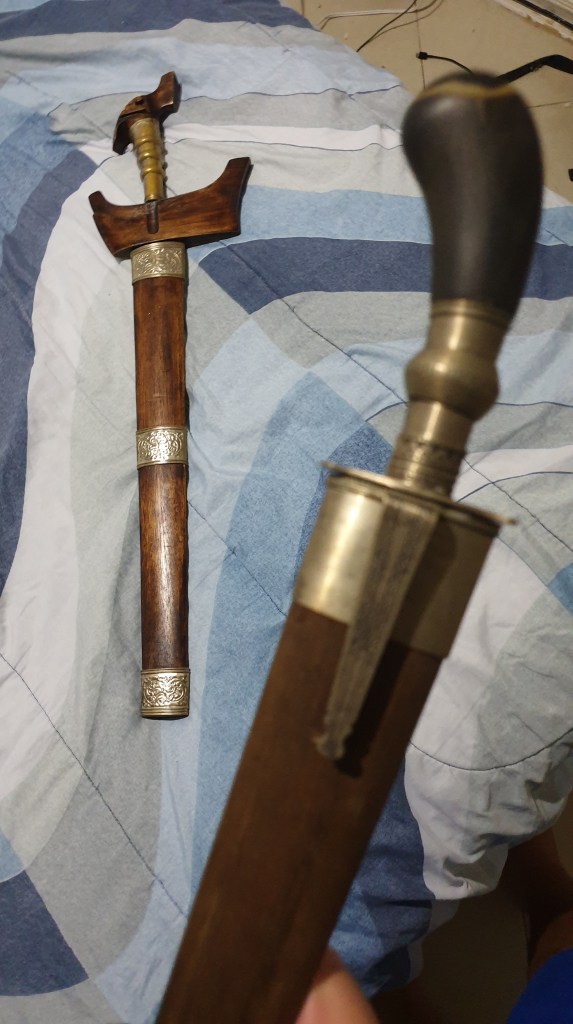
During the Philippines’ multiple millennia-long history, the archipelago had been invaded, subjugated, and occupied by a variety of foreign powers. From the Majapahit Javanese in the 14th century to the Japanese in the 20th, Filipinos have had to defend their land–often at the cost of their lives. Consequently, many regions of the Philippines have developed what can be referred to as a “warrior culture”. This martial culture’s significance can be most visibly perceived at the nature of the tools and implements that Filipinos of antiquity (and many Filipinos in the modern day) utilize in their day-to-day lives. The bolo is perhaps the most well-known example. The bolo started out as a farming tool used by peasants in the countryside, but when the first Spanish conquistadores arrived on the archipelago’s shores bringing fire and steel in the name of God and the King, Filipinos were forced to re-purpose their bolos to defend their land. Another example of the Filipino Warrior culture is the Kris blade from the southern Philippines. Aesthetically similar to other weapons hailing from other parts of the Malay region, the Kris has been modified and adapted by Filipino warriors (most notably the Muslim Moros) to suit their unique situations. The Kris has even been made into a full length sword (as opposed to the Kris dagger most often seen in Indonesia and Malaysia) that can be seen in the fourth picture. The Kris is known for its distinctive wavy blade that has been purported to be for the purpose of causing more blood loss when being pulled out of a victim’s body.
 GCA_PhotoJ